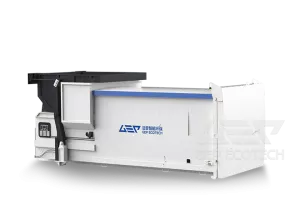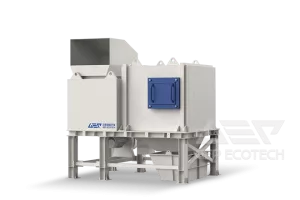
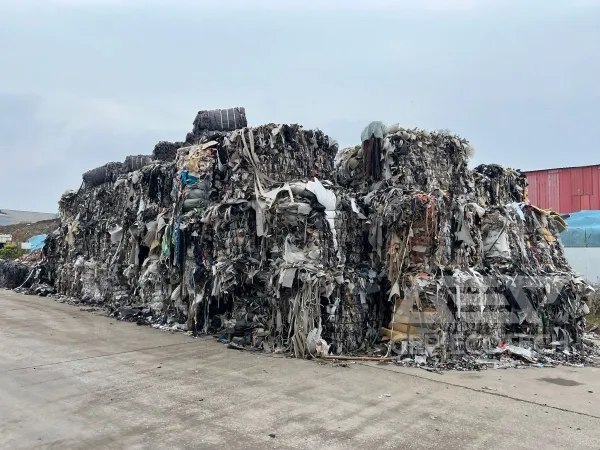
Hello everyone, I am alternative fuel, a undisputed "rising star" in the solid waste circle. You might not believe it, but my predecessor could be the courier cardboard box you discarded yesterday, the empty beverage bottle, the factory workshop scraps, the straw from the fields, or even the tires that have completed their final kilometer. Initially, I was merely the "waste" deemed unworthy of disposal in people's eyes, but once I entered the alternative fuel production system, my "transformation" began.
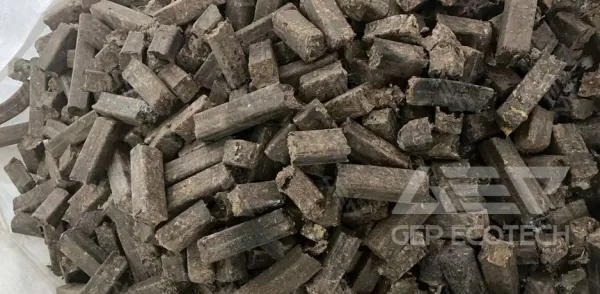
My mission is to replace coal. Cement kilns, power plants, and steel furnaces—these once coal-exclusive "big eaters" are now increasingly accepting me as a fuel. My calorific value can reach 5,000 kcal/kg, and high-quality RDF fuel even matches coal in heat output. Burning me not only saves coal but also reduces carbon emissions—this dual benefit of "solid waste energy conversion + carbon reduction" is precisely the value of my existence.
To become a qualified alternative fuel, I must undergo a comprehensive and meticulous "refining" process. Different origins determine distinct transformation paths.
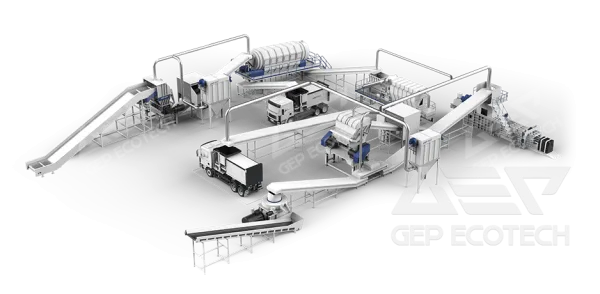
Municipal/Industrial Waste: "Fine-Tuning" of RDF/SRF
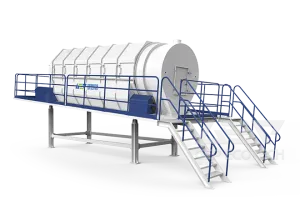
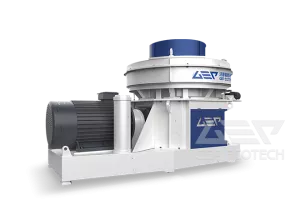
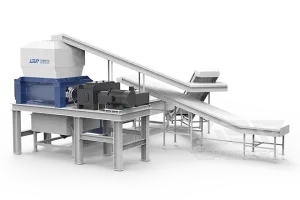
If my precursor was domestic or industrial waste, my transformation journey could be described as "crossing five passes and slaying six generals." First, the chain plate conveyor evenly feeds me into the twin-shaft shredder for primary crushing—the first step of "opening the belly and breaking it down." Then, the magnetic separator removes metals, the drum screen filters out sand and gravel, and the air classifier blows away heavy materials, leaving only lightweight combustibles. Next, the single-shaft shredder takes over for secondary crushing, grinding me into uniformly fine particles. Finally, I am either pressed into dense fuel pellets by the RDF molding machine or packed as bulk SRF fuel. Throughout this process, the pulse dust collector continuously "cleans and purifies" me, while the intelligent control system acts like an experienced commander, monitoring in real time and issuing alerts for anomalies to ensure every step is precise and efficient.
Biomass: The Hammer Mill Is My "Finishing Artisan"
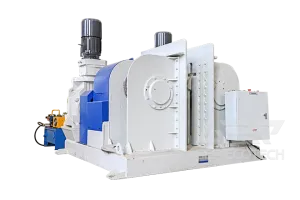
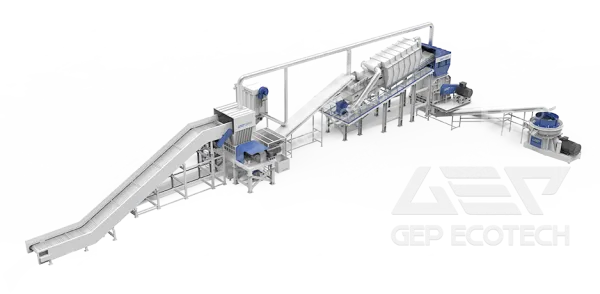
If my precursor is agricultural and forestry waste such as straw, rice husks, or branches, my transformation and life are similar to those of domestic/industrial waste. However, in the crushing stage, I have an exclusive "precision processor"—the ring hammer crusher. The double-shaft shredder first reduces my size, and then the ring hammer crusher takes over: it finely crushes me using a large-diameter, high-inertia rotor and a high-speed rotating blade assembly. Combined with a wide discharge screen, it precisely controls the output size, ensuring that the fuel pellets pressed by the subsequent RDF forming machine have high density and stable calorific value. The final biomass fuel pellets produced can achieve a calorific value of around 4,000 kcal, comparable to coal but much cleaner.
Used Tires: The "Fast and Efficient" Solution for TDF
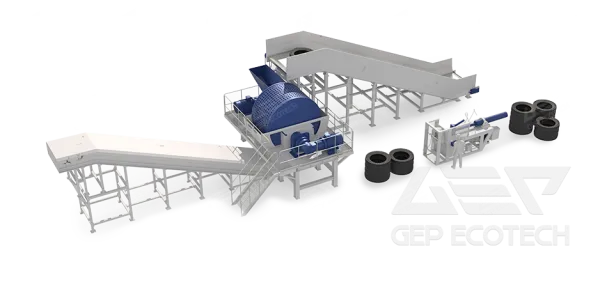
If my predecessor was an old tire, then my transformation is the most straightforward and efficient. For tires containing steel wires, the steel wires are first completely extracted by a tire wire drawing machine to prevent wear and breakage of the cutting tools. Then, a dual-shaft tire shredder directly crushes me—This specialized equipment combines dual-shaft shredding and roller screening functions into one, forming a closed-loop crushing and screening cycle inside, with a compact structure and cost savings. The crushed rubber chunks become TDF fuel, with a calorific value exceeding 8,000 kcal, higher than that of coal. I am directly fed into the cement kiln's decomposition furnace for combustion, providing stable substitution, energy savings, and carbon reduction.
Policies Pave the Way for Me, and the Market Enables Me to Take Up My Post
To better prepare me for the job, the state has taken numerous measures. Documents such as the "Special Action Plan for Energy Conservation and Carbon Reduction in the Cement Industry," the "Guidance on Vigorously Implementing Renewable Energy Substitution Actions," and the "Three-Year Action Plan for Energy Conservation and Carbon Reduction Upgrades in Key Industries" encourage high-energy-consuming sectors to adopt alternative fuel applications. Industry standards like the "Definition and Classification of Solid Alternative Fuels," the "Technical Specifications for Solid Alternative Fuel Preparation," and the "Solid Alternative Fuels for Cement Kilns" regulate raw materials, production, and quality control, promoting standardized industry development. Relying on standardized processes and market mechanisms, I am transitioning from an optional supplementary energy source to a critical resource for industrial carbon reduction.
My story is not confined to a single industrial park. Every piece of alternative fuel born from waste is a redefinition of discarded materials, and a testament to a city or industry's commitment to resource conservation and future responsibility. I am not the endpoint, but a new beginning—waste rebirth, transforming refuse into fuel, cycling endlessly. In the future, when you visit a cement plant or pass by a power station, may you recall my story: a pile of discarded waste, empowered by technology, can also ignite the spark of green industrial development.