In the field of solid waste treatment and resource recycling, shredders are one of the core pieces of equipment in a processing line. When choosing the right solution, one of the most common questions customers ask is:
What is the difference between high-speed shredders and low-speed shredders, and which one is the right choice?
This article explains the key technical differences, application scenarios, and the characteristics of both types in the simplest way possible.
Core Difference: Speed vs. Torque
From a technical standpoint, the most fundamental difference lies in rotor speed.
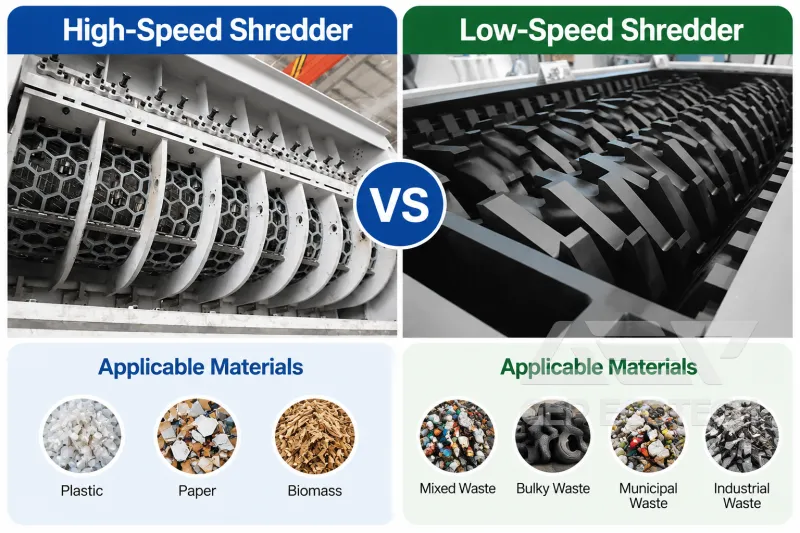
- High-speed shredders operate at a higher rotor speed, completing more revolutions per minute and focusing on fast cutting and impact crushing efficiency. Simply put, they are designed to quickly break materials down into smaller particles.
- Low-speed shredders, on the other hand, run slowly but generate immense torque – in other words, they've got serious muscle. They can grind through tough materials with raw power and stamina.
One key point to emphasize: "Low-speed" does NOT mean "low-efficiency." Thanks to their superior torque, low-speed shredders often achieve higher and more stable throughput in many applications.
Comparison at a Glance
| Comparison | High-Speed Shredder | Low-Speed Shredder (Our Models) |
|---|---|---|
| Rotor Speed | High | Low |
| Torque | Lower | High |
| Application Stage | Fine Crushing | Primary Shredding / Final Size Reduction |
| Material Requirements | Requires clean materials with fewer impurities | Handles complex materials directly |
| Foreign Object Protection | More vulnerable, slower response | Automatic reverse, shutdown & alarm |
| Output Size | Very fine | Larger size, but can achieve fine output with screens |
| Continuous Operation | Lower | Higher |
Final Thoughts
A high-speed shredder is not a bad choice — it is simply more selective about the materials it handles. A low-speed shredder, on the other hand, is the tough and reliable workhorse that can handle a wider range of challenging materials.
In the solid waste treatment industry, equipment downtime means production losses, and equipment damage means unexpected costs. Choosing the right shredder for your specific application ensures long-term reliability, easier operation, and lower maintenance costs.
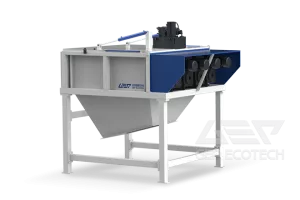
If you are processing mixed waste, bulky waste, tires, municipal solid waste, or industrial solid waste, our GC Primary Shredder, GD Twin-Shaft Shredder, and GF Four-Shaft Shredder series low-speed shredding equipment could be the reliable partner you need.
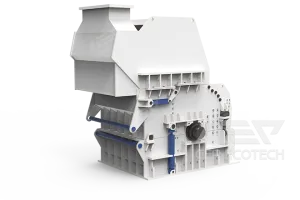
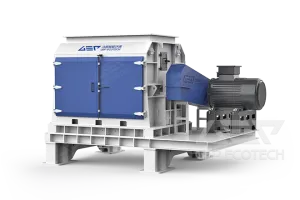
If you are handling relatively clean and lightweight materials such as biomass, plastic, or waste paper, our GS Single-Shaft Shredder and GXB Hammer Mill Crusher are the ideal experts for efficient fine size reduction.
Want to learn more about technical specifications or equipment selection recommendations? Feel free to contact us anytime.