If you're in the non-ferrous recycling business, you already know—copper-aluminum radiators and scrap cables are high-value, but they're a pain to process.
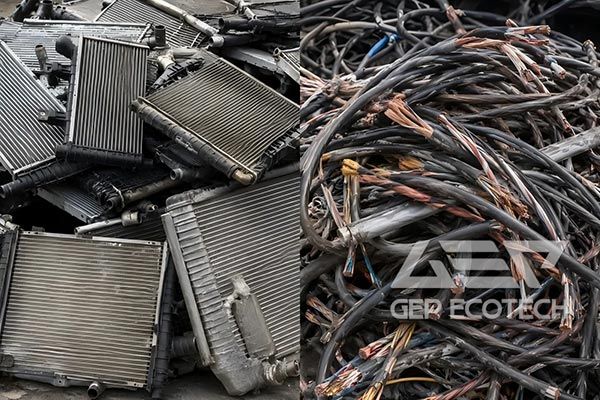
Automotive radiators, air-conditioning heat exchangers, and water tank radiators are made up of tightly packed copper tubes, aluminum fins, and steel frames. Scrap cables are another challenge—They are flexible, long, and can easily wrap around the rotor.
So when it comes to primary size reduction, the goal is not necessarily to make the material extremely small. What really matters is opening up the material structure, reducing its volume, and preparing it for the next stage of sorting and recycling.
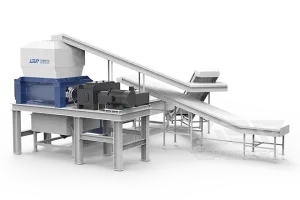
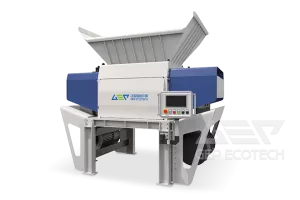
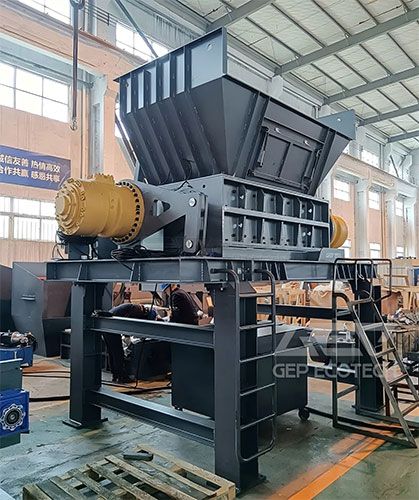
For high-throughput applications involving copper and aluminum radiators and scrap cables, GEP ECOTECH recommends a hydraulic double shaft shredder.
Why Do We Recommend a Hydraulic Double Shaft Shredder?
Our hydraulic double shaft shredder uses a hydraulic motor + planetary gearbox drive system, making it particularly suitable for heavy-duty metal scrap applications.
Compared with conventional electric motor and belt drive systems, the hydraulic drive offers two major advantages.
1. High Torque for Tough Materials
Radiator cores can be dense, while cable bundles can be surprisingly difficult to pull apart.
The hydraulic drive delivers strong torque even at low speed, making it easier to handle:
- Dense copper and aluminum radiator cores
- Large and irregular metal pieces
- Long and tangled cable bundles
In other words, it is not about spinning faster. It is about having enough power when the material fights back.
2. Automatic Reverse Protection
Anyone who processes scrap metal knows that the feed is rarely perfectly uniform.
You may occasionally get an oversized piece, an unexpected foreign object, or a cable bundle that starts wrapping around the rotor.
When the load becomes too high, the hydraulic system can automatically:
- Stop the rotor
- Reverse the rotation
- Release the stuck material
This means less manual intervention, less downtime, and a smoother production process.
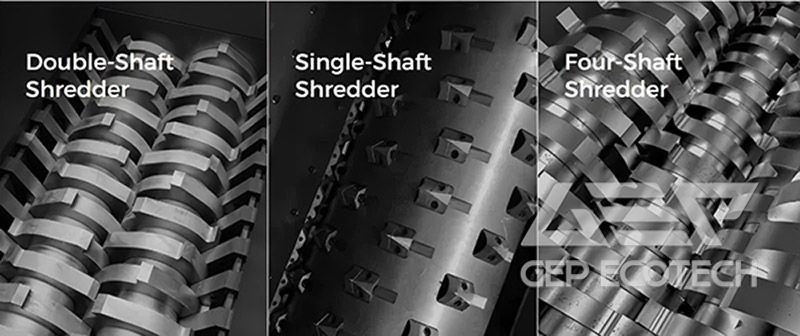
What About Single-Shaft or Four-Shaft?
Single-shaft shredder works great for hard, brittle materials like plastic and rubber. But feed it cables or layered radiators? They wrap around the rotor, and the pusher system keeps overloading. It's just not the right fit.
Four-shaft shredder gives you fine output, sure. But it's overbuilt for primary shredding—more blades, more complexity, higher maintenance cost. For coarse reduction, it's more machine than you need, and your operating costs will show it.
Copper-aluminum radiators and cables aren't ordinary waste. They demand equipment that's tough, smart, and reliable. Get the right shredder, and you get stable operation, fewer headaches, and maximum material recovery.
Looking for a solution that actually works for these materials? Reach out to GEP ECOTECH. We're happy to talk through your specific needs and help you find the right fit.