Aged Waste Utilization Solution: Turning Waste into Treasure
With the acceleration of urbanization and the mounting scarcity of land resources, the ecological rehabilitation and resource utilization of historical landfills have moved from a niche environmental concern to a fast-expanding segment of the global waste management industry. The global landfill mining market was estimated at USD 175.1 million in 2024 and is projected to reach USD 250.1 million by 2033, growing at a CAGR of 4.1%. The broader landfill remediation market has already crossed the USD 40 billion mark in direct value, driven by stricter closure mandates and the redevelopment potential of disused sites. The global municipal solid waste treatment service market was valued at USD 436.0 billion in 2024, with projections reaching USD 776.8 billion by 2031 at a CAGR of 8.7%. A parallel shift is underway in policy and practice—municipalities are moving from "zero-landfill" targets toward "negative-landfill" strategies, excavating and processing legacy waste to recover land, materials, and energy.
This transition is transforming Aged Waste from a perpetual environmental liability into what the industry increasingly calls an urban mine. The disposal of aged waste, therefore, is no longer merely a remediation task; it is a systematic project integrating environmental governance, mechanical sorting, and resource recovery. Its core goal remains unchanged: to efficiently separate stabilized waste that has been buried for years under safe and controlled conditions and to maximize resource utilization.
Definition, Characteristics, and Disposal Necessity
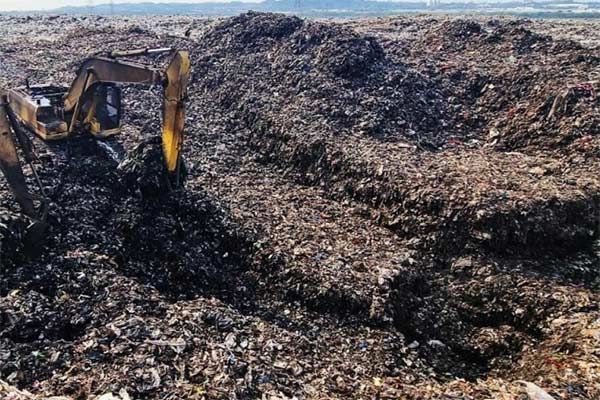
Aged waste refers to household waste that has undergone long-term anaerobic degradation and physicochemical reactions in landfills, usually for 8–10 years or more, and has reached a relatively stable state. Original organic components such as kitchen waste, paper, and wood have largely decomposed into humus and biogas. The stabilized product mainly includes: humus soil, usually 40%–60%, the final product of biodegradation with high organic matter but possible salt and heavy metal enrichment; inert substances such as bricks, rubble, ceramics, and glass, about 20%–35%, with stable physical and chemical properties; difficult-to-degrade materials, mainly plastics, especially film plastics, rubber, and textiles, about 10%–25%, a key focus for resource recovery; and metals, mainly ferrous metals, about 1%–5%, with high recycling value.
Disposal has multiple strategic benefits. It releases valuable occupied land for urban development or ecological construction and eliminates long-term risks such as leachate pollution of groundwater and uncontrolled landfill gas discharge. It also converts inert materials, metals, plastics, and humus into renewable resources, reducing primary resource extraction and promoting a circular economy.
Typical Process Overview
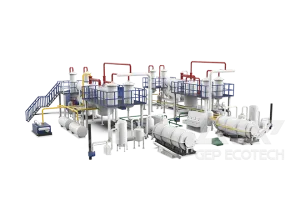
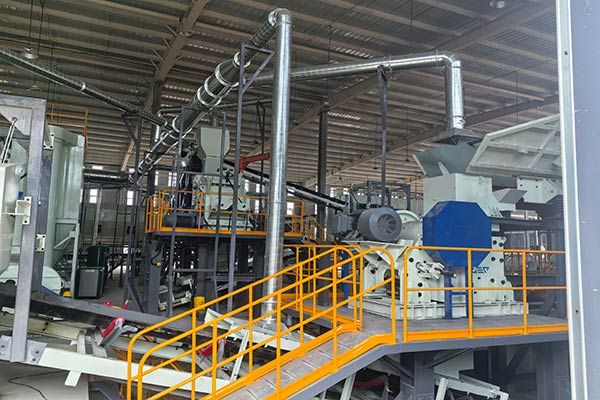
A standardized aged waste resource utilization line can be summarized as: excavation and feeding → crushing and homogenization → multi-stage sorting → resource utilization and safe disposal. It is a continuous, factory-style production line designed to convert mixed aged waste into resource-ready materials such as humus, combustibles, metals, and aggregates. In pretreatment, excavated blocks are crushed to uniform particle size for efficient downstream sorting. In core sorting, multi-stage physical methods separate materials by particle size, density, and magnetism. In resource utilization and final disposal, each output is targeted for use or safe treatment. The process should remain flexible because aged waste composition varies by landfill age, climate, and original waste stream. Screening apertures, crushing gaps, airflow, and magnetic stages must be matched to actual material properties.
Core Disposal Equipment
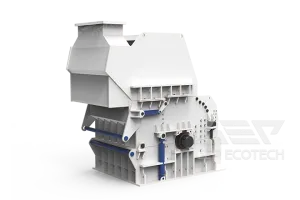
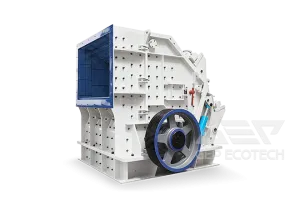
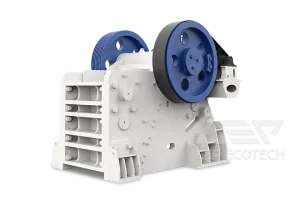
The jaw crusher sits at the front of the process chain and performs initial crushing. Its powerful squeezing force breaks hard lumps formed by long-term compaction, homogenizing material and ensuring subsequent screening efficiency. It requires high wear resistance and overload protection against bricks, metals, and other hard objects.
The trommel screen is core equipment for particle size classification. Garbage tumbles forward inside a tilted rotating drum. Materials smaller than the screen apertures, mainly humus and fine plastics, pass through, while larger materials such as bricks and large plastics discharge forward. Multi-section drums with different apertures are often combined for multi-stage screening.
The wind shifter separates light and heavy materials based on aerodynamics. In a controlled airflow field, light plastics and paper are carried away for collection, while heavier humus and stones fall nearby. It is one of the most effective methods for extracting high-calorific-value combustibles from mixed waste. Adjustable wind speed and pressure adapt to different humidity and specific gravity, achieving optimal separation.
The magnetic separator recovers ferrous metals. High-strength permanent or electromagnetic rollers adsorb ferromagnetic materials onto the drum surface; when the drum rotates to the non-magnetic zone, the materials automatically fall off and are collected. The technology is mature, recovery efficiency is usually above 95%, and economic value is significant. Magnetic separators are often placed after crushing and after combustible separation for multi-stage recovery.
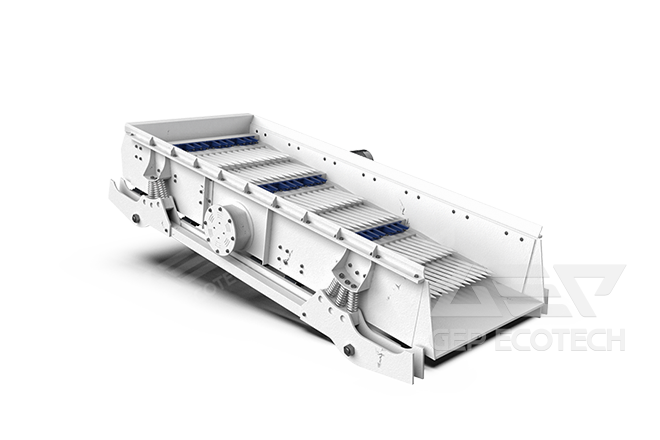
The vibrating screen performs final screening and purification. For example, it screens lightweight materials from the wind shifter to remove fine dust, or finely screens humus to remove fine impurities. High-frequency vibration ensures screening efficiency and product cleanliness.
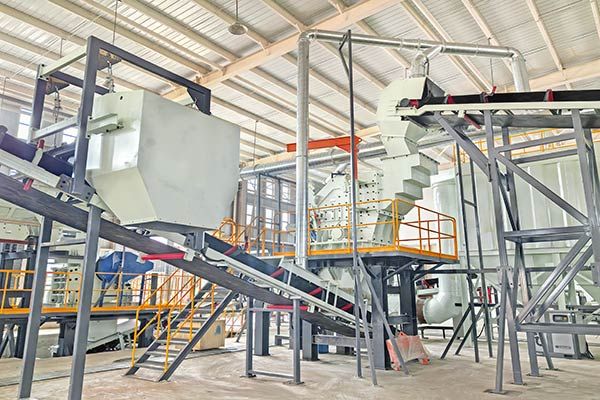
GEP ECOTECH follows market and customer needs and is committed to creating a "smarter, more refined, and cleaner" aged waste disposal process. In GEP ECOTECH solutions, equipment models and parameters such as screen aperture sequence, wind speed, and magnetic field strength are finely designed and dynamically adjusted according to specific waste composition to form an optimal process combination. GEP ECOTECH can also equip the line with enclosed workshops, negative-pressure dust removal, spray deodorization, and leachate drainage, truly achieving "turning waste into treasure and being environmentally friendly" and converting environmental burdens into sustainable resources. If you are evaluating the aged waste resource utilization line, please feel free to contact us for inquiry.