Agricultural Film Recycling: Comparing Mechanical Sorting and Water Washing Line Solutions
As an important helper in agricultural production, plastic film can effectively increase soil temperature, maintain soil moisture, inhibit weed growth, and create favorable conditions for crop growth. However, the main raw material for traditional agricultural film is polyethylene, which is difficult to degrade in natural environments and has become the main source of "white pollution" in farmland. Residual plastic film can damage soil structure, affect crop root growth, reduce crop yield and quality, and even cause diseases when ingested by livestock.
At present, there are mainly two directions for the treatment of waste plastic film: harmless treatment and resource utilization. Harmless treatment refers to the safe incineration or landfill of waste plastic film with low utilization value to avoid environmental pollution. Resource utilization can process recycled plastic film into recycled plastic pellets, which can be used to manufacture new plastic products such as garbage bags, shopping bags, and plastic pallets. The recycled plastic film is not a "pure" plastic film, but a complex mixture of waste materials, including impurities such as stones, soil blocks, drip irrigation pipes, and plant residues. Sorting is a prerequisite for its efficient utilization, and there are two mainstream processes to choose from: mechanical sorting and water washing.
Recently, GEP ECOTECH has observed a rising number of inquiries about agricultural film recycling. As two common recycling processes, mechanical sorting and water washing lines are increasingly compared by customers in terms of cost and benefit. This article outlines both options and their suitable application scenarios.
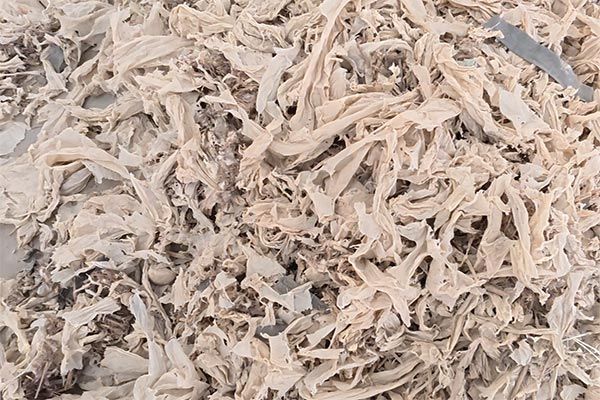
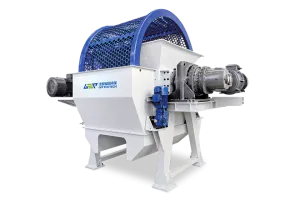
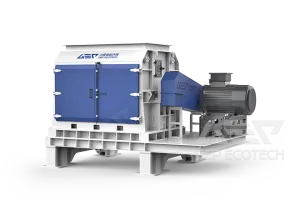
Plan A: Shredder + Trommel Screen
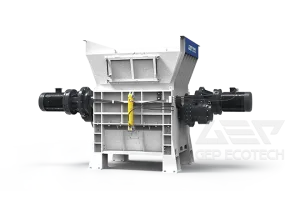
Process flow: Collected waste plastic film (usually mixed with a large amount of soil, stones, and straw roots) → shredder → trommel screen → relatively clean film and screened residue.
Advantages:
Reduce volume: Fluffy waste plastic film is shredded to significantly reduce its volume, making subsequent transportation, screening, and storage easier.
Liberate impurities: Through shearing and tearing, soil blocks tightly wrapped in the film are broken, and entangled roots, stems, and straw are cut off, causing most of the soil attached to the film to fall off.
Homogenize material: Plastic film of different sizes is shredded into relatively uniform fragments, creating favorable conditions for efficient sorting by the subsequent trommel screen.
Efficient separation of waste soil: This is the main function of the trommel screen. Shredded small pieces of soil and sand (usually with small particle size) are screened out through the sieve holes, while larger plastic film pieces are conveyed out as the drum rotates.
Simple structure and reliable operation: The trommel screen has a relatively simple mechanical structure and a low failure rate, and can adapt to harsh working conditions in the recycling environment.
Large processing capacity: It can operate continuously and is suitable for handling large amounts of mixed materials recovered from the field.
This plan has three highlights: low cost, simple process, and suitability for arid areas. The entire process requires no water and has no sewage treatment costs, resulting in relatively low equipment investment and operating costs. It can remove most loosely attached soil. For scenarios where soil content is not particularly high or cleanliness requirements for recycled film are not extreme, this solution can be used as final treatment. The product can be used for plastic pyrolysis and the manufacture of low-value plastic products such as trash cans and low-grade plastic pallets. It has obvious advantages in water-scarce areas.
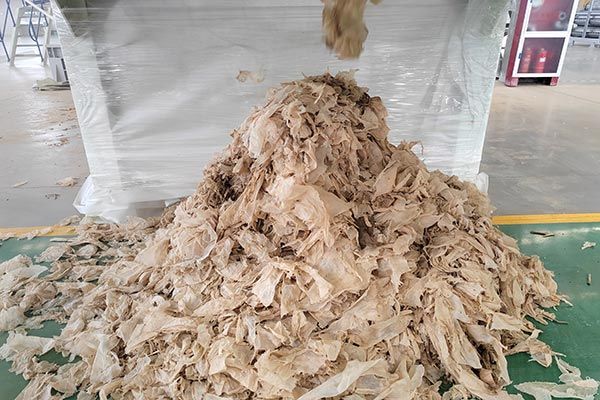
Option B: Shredder + Water Wash
Process flow: Shredded film → water washing tank/friction cleaning machine → rinse → dehydration → high-purity film.
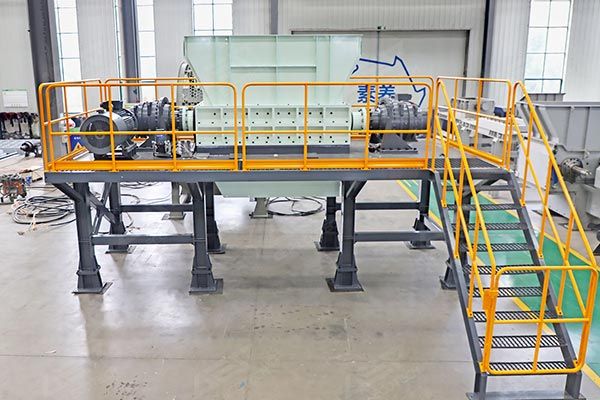
Advantages:
Extremely high cleanliness: This is the core advantage of water washing. Through strong friction and stirring in water, stubborn soil, dust, and organic residues adhering to the film surface can be effectively peeled off.
Further improved purity: By utilizing the buoyancy of water, heavy impurities such as stones, glass, and metals with a specific gravity greater than water can be separated through sedimentation or flotation, as well as light impurities such as straw and sawdust with a specific gravity less than water, achieving multiple purifications.
Significantly improved quality and value: After washing and dehydration, the film fragments have high cleanliness and good appearance, and the impurity rate can be reduced to 1%–2% or even lower. This high-quality recycled plastic can be used to manufacture higher-value products, such as blow-molded new film (which must meet standards), plastic pipes, and automotive parts, greatly improving economic benefits.
This plan has significant advantages in improving product quality and achieving high economic returns. However, because it requires a continuous water supply, it consumes a large amount of water resources. The cleaning process generates a large amount of wastewater containing soil, plastic particles, and agricultural residues, so a wastewater treatment system (such as sedimentation tanks, flocculation, and filtration) must be provided.
GEP ECOTECH has been deeply involved in solid waste resource utilization for many years, with rich project experience and constant attention to the latest cutting-edge processes and market demands. We have been closely monitoring the latest developments in the agricultural film recycling industry, integrating various reuse processes into our pretreatment process, and providing customers with multiple optional solutions to match diverse market needs. Whether you have a limited budget, are located in an arid area, or need high-value utilization of plastic film to create the best economic benefits, we can customize a solution according to your situation and needs. We welcome customers interested in entering this industry to consult us.