Integrated Organic Waste Shredder-Presser for Space-Limited Source Reduction
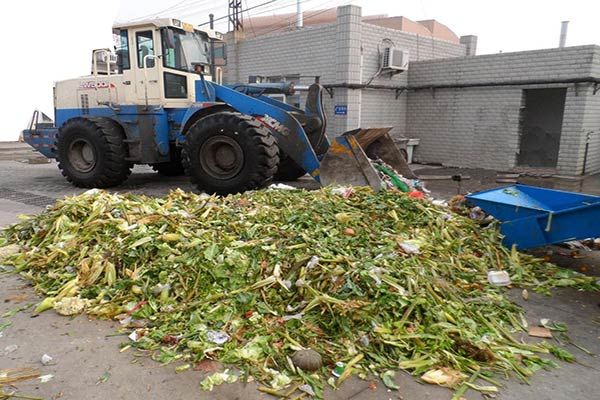
For supermarkets, wet markets, hotels, and restaurants, organic waste fruit and vegetable waste is generated every day, but the space available for waste handling is often limited. The disposal volume may not be large, yet the waste needs to be handled quickly to avoid odors, pests, and extra storage and transportation costs. These sites do not need a large, complex waste treatment line. They need a mature, compact, and easy-to-operate machine that can fit into an existing site and work with the equipment they already have.
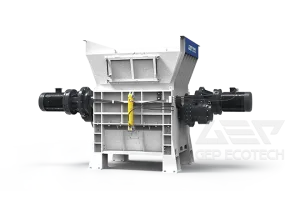
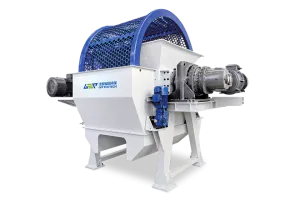
GEP ECOTECH's organic waste shredding and pressing integrated machine is designed for this kind of situation. It is a mature and stable unit with a compact structure. It can typically reduce the volume and weight of fruit and vegetable waste by 60% to 90%, significantly lowering subsequent storage, transportation, and disposal costs. For supermarket operators, market managers, and hotel or restaurant staff, this means less waste to store, fewer transport trips, and a cleaner working environment.
Advantages of Integrated Organic Waste Shredder-Presser
This machine is particularly relevant for customers who already have some waste handling equipment and want to improve the front-end process without rebuilding the whole site. For example, one customer operating multiple supermarket chains already had a baler in use. They asked for a small shredding and dewatering machine that could be connected to their existing baler. This is a common need: the site has limited space, the daily waste volume is moderate, and the customer wants a practical addition rather than a completely new system. GEP ECOTECH can provide a customized solution based on the customer's existing equipment, compact site layout, and limited available space. The goal is to make the new unit fit into the current workflow, not disrupt it.
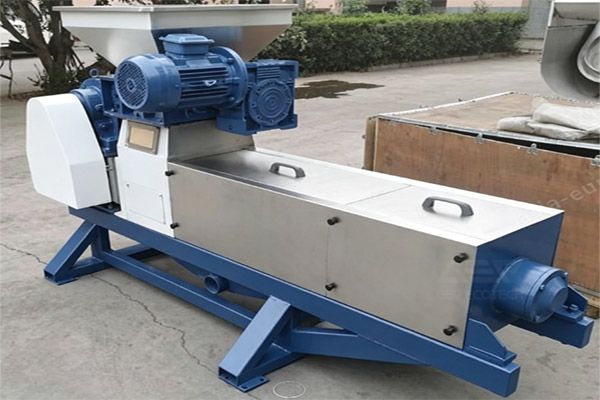
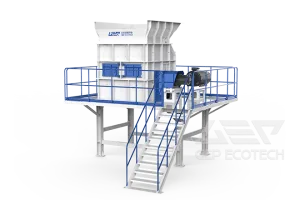
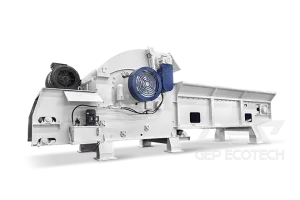
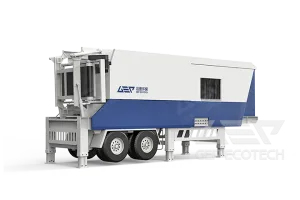
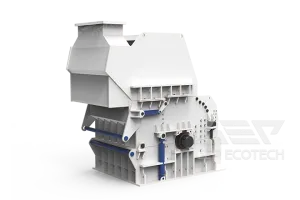
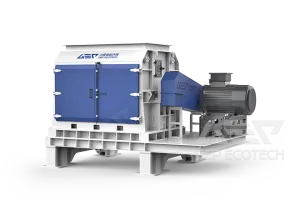
The vertical integrated design reflects this practical approach. Traditional shredding and pressing often require two separate machines connected by a conveyor belt, which takes up a large area. In this integrated machine, the shredder and press are stacked vertically. Material flows directly from top to bottom into the next process, so the intermediate conveying link is eliminated and the equipment footprint is significantly reduced. The shredder is directly connected to the press feed inlet via a flange, giving a simple and efficient structure. The sorting, shredding, dewatering, and other functional modules are closely arranged in the horizontal direction, making the whole machine compact and avoiding wasted space, as well as getting a clear and convenient workflow.
User-friendly details also matter in small sites. Some models support an automatic bin lifting and tipping system that connects directly to standard garbage bins, reducing manual dumping. The machine can also be optionally equipped with a remote monitoring interface, making it easier to manage operating status in tight spaces. These features help limited space achieve higher disposal efficiency.
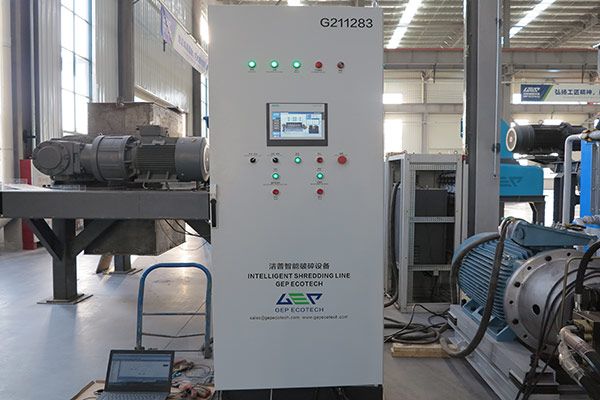
The machine is especially suitable for fruit and vegetable markets and supermarket fresh food sections. These places generate large amounts of vegetable leaves, fruit peels, and rotten fruit every day. The waste is usually of a single type, large in volume, and generated during fixed time periods. With this machine, efficient shredding and dewatering can be completed on site, reducing waste transport volume and frequency and saving on transportation costs. The same logic applies to hotels and restaurants that need a small, space-saving solution for daily fruit and vegetable waste.
Recycling Value of Organic Waste
The dried residue after dewatering is not simply waste. It can be used as a resource. There are three mainstream downstream utilization paths: making organic fertilizer or soil conditioner, feeding anaerobic fermentation systems to produce biogas energy, and serving as feed for insect farming. The better the front-end shredding, pressing, and dewatering process, the higher the efficiency and product quality of subsequent treatment. Lower moisture content in the dried residue means a shorter fermentation cycle and higher efficiency. A uniform residue texture and fibrous structure also help oxygen contact and can shorten the fermentation period of a fertilizer production line.
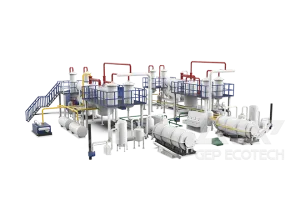
GEP ECOTECH does not provide one-size-fits-all standardized products. We customize solutions based on the customer's actual working conditions. Optional modules include shredders, presses, feeding hoists, sorting platforms, oil-water separation systems, deodorization systems, automatic weighing, and aerobic fermentation systems. Functions can be combined as needed, so customers do not pay for unnecessary features. Also we has rich project experience in organic waste disposal for customer reference. We also provide on-site installation guidance, commissioning, operation training, and comprehensive after-sales service to ensure the equipment runs smoothly and is easy to manage.
If you are evaluating a related project, GEP ECOTECH is willing to provide equipment selection references based on actual working conditions. Starting from the customer's real scenario, we can help choose the most suitable processing solution for your site, your existing equipment, and your available space.