
Driven by Both Policy and Market Forces, the Supply-Demand Imbalance in the Used Battery Recycling Sector Has Become Pronounced
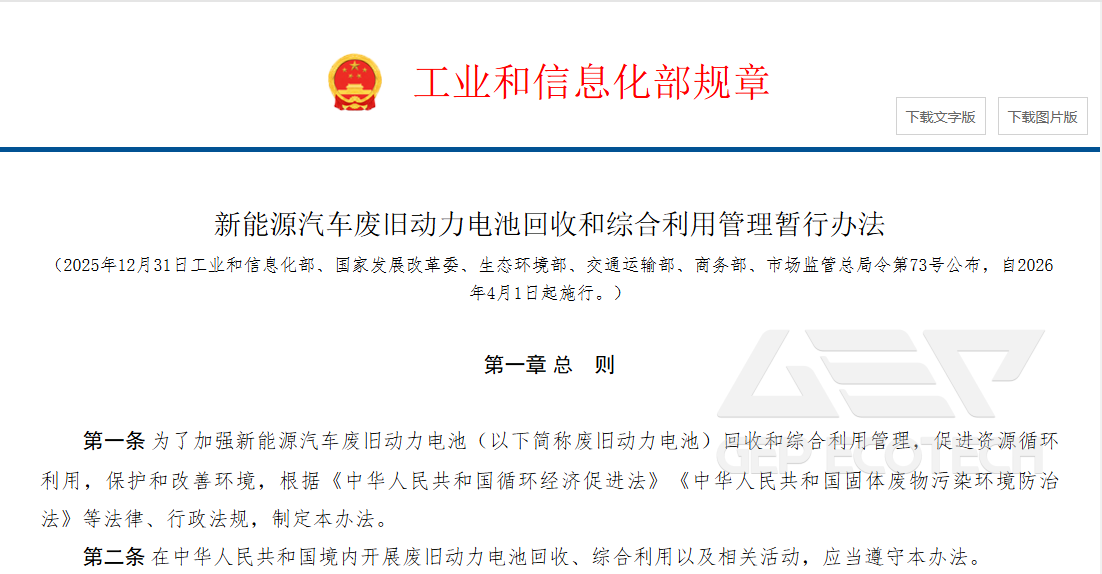
In recent years, the state has introduced a series of circular economy support and regulatory policies targeting the "three new items" of new energy (power batteries, photovoltaic modules, and wind turbine blades). The "14th Five-Year Plan for Circular Economy Development" explicitly calls for addressing the shortcomings in the resource utilization of used power batteries. The "Interim Measures for the Recycling and Comprehensive Utilization of Used Power Batteries from New Energy Vehicles," jointly issued by six ministries and departments, came into effect on April 1, requiring the establishment of a full life-cycle traceability management mechanism for batteries and significantly raising the safety, environmental, and resource utilization entry thresholds for the industry.
Meanwhile, early batches of domestically produced new energy vehicle batteries are approaching their 5-8 year service life, marking the official entry of the industry into a large-scale retirement phase. By 2026, the total retired battery volume will exceed one million tons, yet enterprises with compliant recycling qualifications can currently process less than 30% of the waste batteries, leading to a persistent widening of market disposal gaps. The high dependence on foreign sources for strategic minerals such as lithium, cobalt, and nickel underscores the urgent need for the industry to enhance the recovery rate of valuable metals from retired batteries and reduce overall recycling costs.
Traditional Battery Recycling Processes Suffer from Prominent Shortcomings, with Triple Bottlenecks in Safety, Cost, and Efficiency That Are Difficult to Overcome
The current mainstream resource utilization pathways in the industry include pyrometallurgical high-temperature smelting, hydrometallurgical leaching, and physical-mechanical dismantling, all of which require battery pretreatment and shredding as the core preliminary process. The long-standing traditional pretreatment process involves completing extended pre-discharge before proceeding with dismantling, multi-stage shredding, and separation operations. This entire process presents irreconcilable industry pain points. First, there are cost and efficiency disadvantages: the pre-discharge process consumes hours to days of site space and energy, prolonging the entire production line cycle, while manual handling and static storage simultaneously drive up operational costs. Second, safety risks cannot be fully eliminated—improper battery discharge or electrolyte leakage can easily trigger short circuits, spontaneous combustion, or even explosions. Open working environments further amplify fire spread, placing significant safety pressure on frontline operators. Additionally, the multi-stage open processing structure lacks sealing, allowing electrolyte evaporation to produce odors and harmful emissions, which continuously increases environmental treatment costs. Moreover, the significant variations in specifications among square, cylindrical, and pouch-shaped batteries, along with the weak adaptability of traditional equipment, make it difficult to achieve continuous automated production, resulting in evident capacity shortages when facing the concentrated surge of retired batteries.
GEP ECOTECH Complete Charged Shredding System, Reconstructing Pretreatment Process with Fully Enclosed Intelligent Solutions for the Entire Workflow
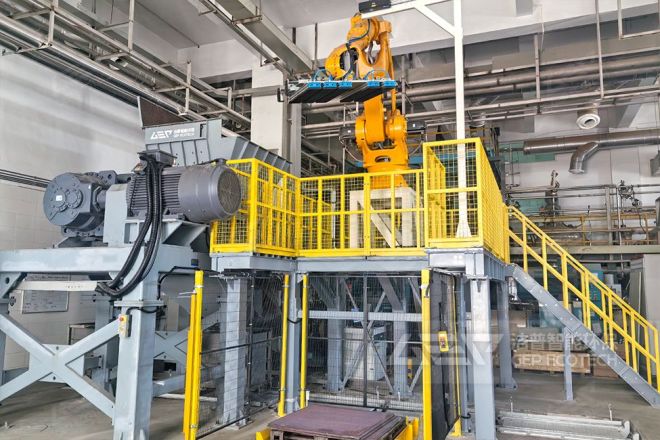
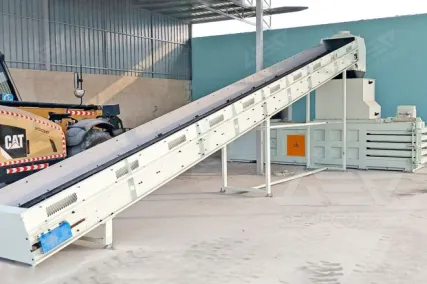
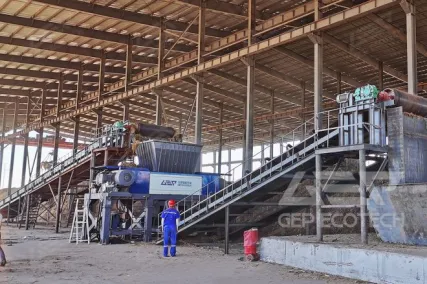
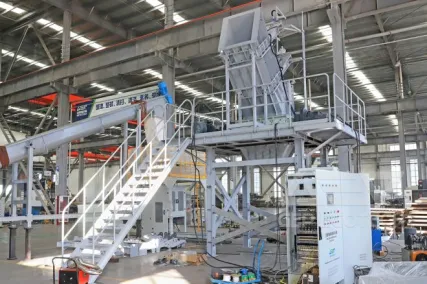
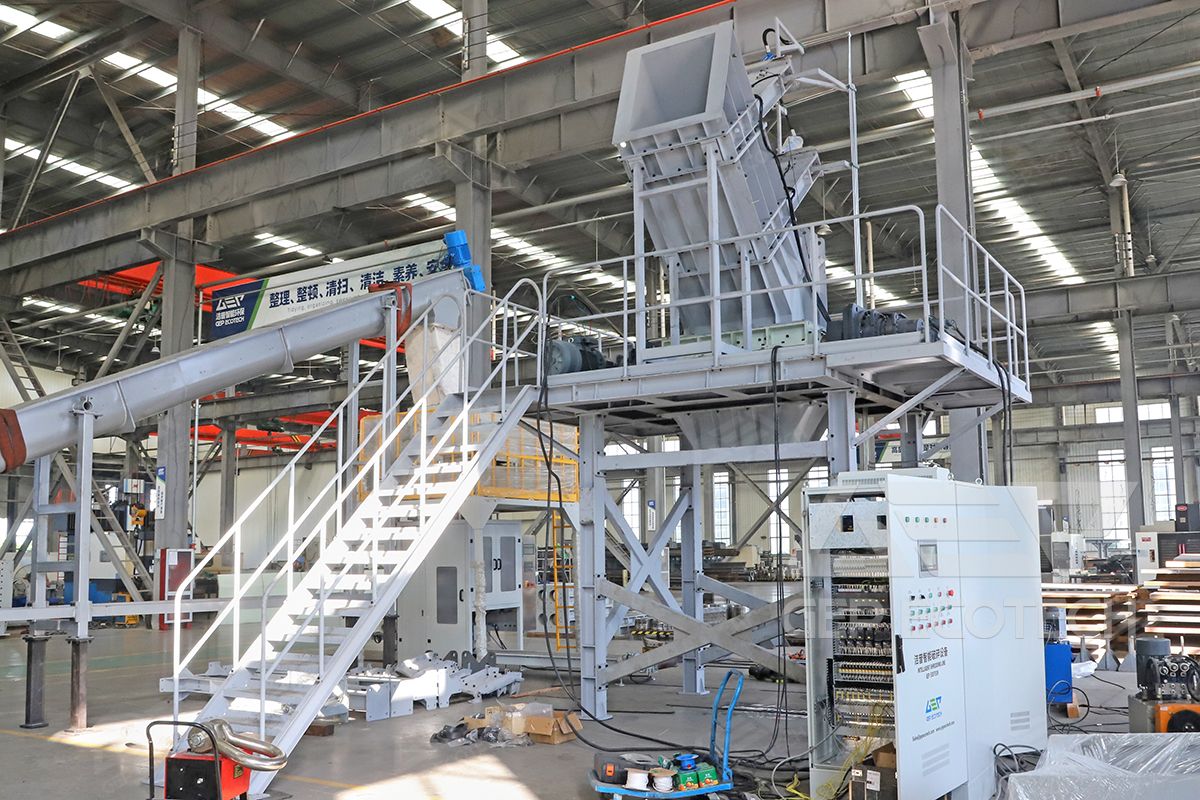
To address the inherent defects of traditional processes, GEP ECOTECH has independently developed an intelligent set of systems for the continuous shredding of live waste batteries. The core innovation lies in the entire process requiring no pre-discharge, enabling continuous shredding of live batteries in an inert gas-sealed environment. The entire system operates through the coordinated interaction of six functional modules: the automatic feeding unit can be optionally equipped with conveying devices to achieve unmanned continuous feeding; the feed hopper is paired with dual-sealed slide valves and nitrogen charging/exhaust structures, with precision-machined sealing mechanisms to prevent gas leakage; the shredding unit employs impact-resistant specialized blades and reinforced blade boxes, allowing flexible adjustment of the discharge particle size to enhance the material dissociation effect in subsequent sorting and metallurgical processes; the enclosed spiral discharge device prevents nitrogen loss, ensuring the stability of the inert protective environment; the system is equipped with triple fire protection structures including nitrogen shielding, automatic fire suppression, and explosion/pressure relief, along with multi-dimensional sensing for temperature, pressure, flame, and oxygen; the PLC intelligent control system collects real-time operational data along the entire line, dynamically manages oxygen levels within the chamber, and maintains a safe low-oxygen working condition.
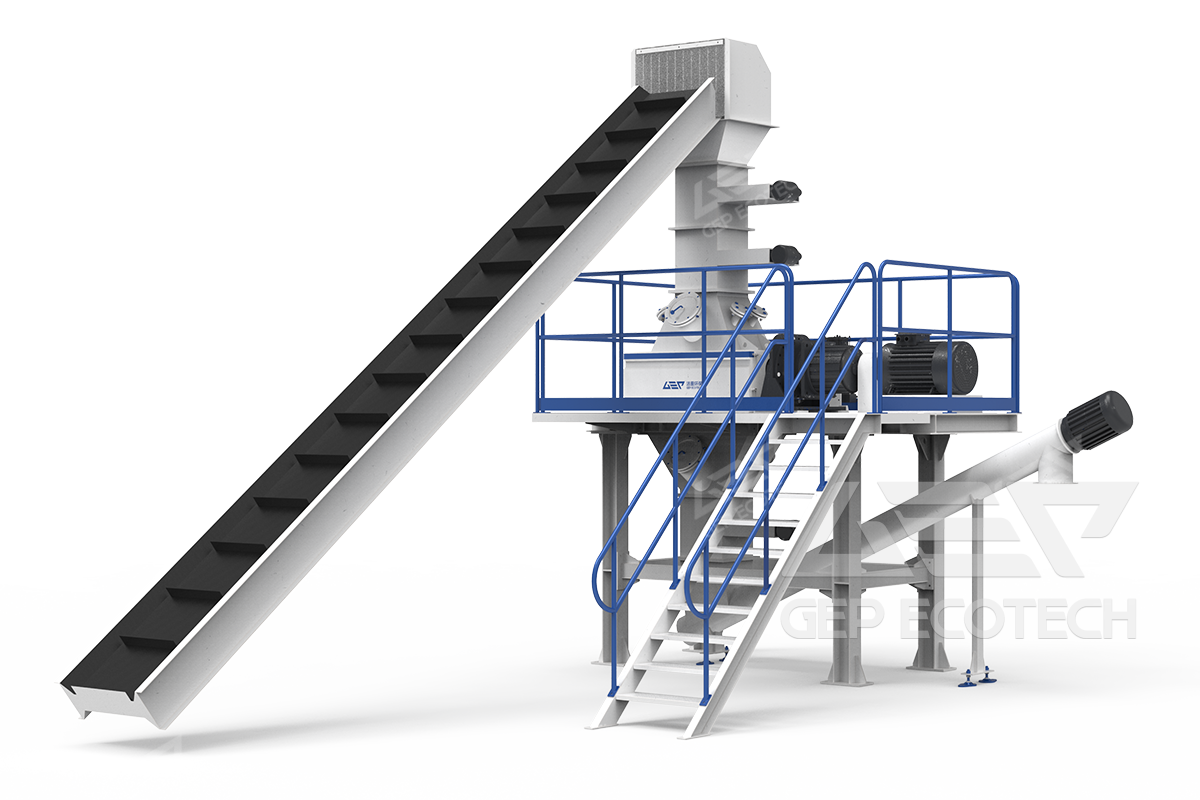
The entire set of equipment forms a standardized closed-loop operation: After the battery raw materials are automatically fed into the buffer silo, nitrogen is rapidly injected to reduce oxygen levels. Upon meeting standards, the gate valves open for feeding and Shredding, with the entire chamber isolated from air. If the sensing equipment detects abnormal fire conditions, the system immediately shuts down, automatically locks all gate valves to isolate combustible air, and simultaneously activates the fire suppression system to address potential hazards, establishing a multi-layered safety control system from feeding to discharging.
Implementation of Multi-Dimensional Core Advantages, Aligning with Industry Requirements for Scalability, Compliance, and Low-Cost Development
Compared to traditional processes, the GEP ECOTECH live battery Shredding system achieves a comprehensive dimensional upgrade. First, it simplifies the production process by completely eliminating the discharge and static placement steps, thereby shortening the production cycle, reducing energy consumption, and cutting down on site costs. Second, it is compatible with all battery types, unrestricted by cell shape or capacity, and suitable for retired batteries from energy storage, passenger vehicles, and two-wheelers. Third, its highly automated operation significantly reduces on-site manual intervention, lowering the likelihood of personal safety incidents. Fourth, the fully enclosed inert working environment not only suppresses fire spread but also minimizes the emission of harmful gases, easily meeting environmental compliance standards. Fifth, the equipment supports modular customization based on a company's material volume and downstream metallurgical processes, catering to both small-to-medium recovery production lines and large-scale processing facilities. Against the backdrop of tightening regulations and surging raw material supply, it helps recycling enterprises balance safety investments, operational costs, and metal recovery returns, providing a standardized pretreatment solution for the power battery recycling industry.