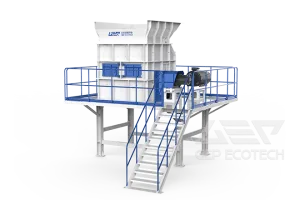
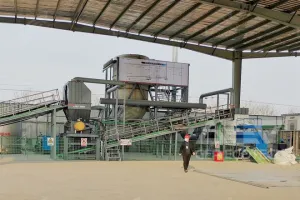
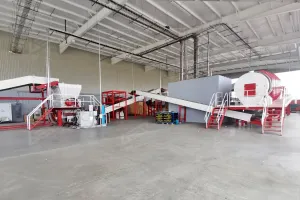
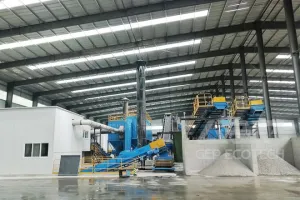
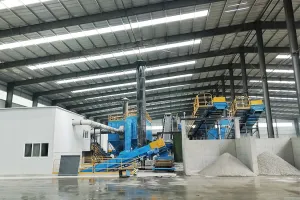
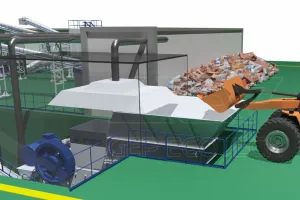
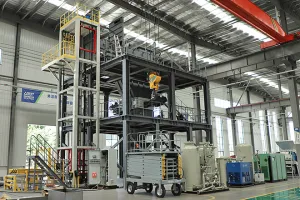
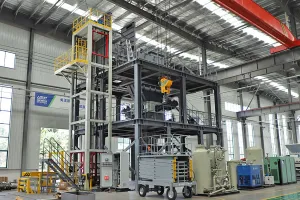
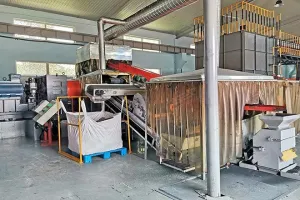
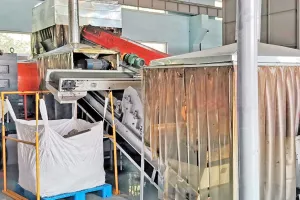
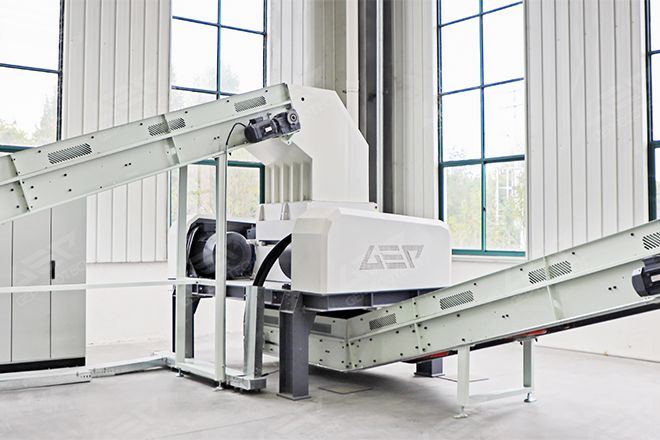
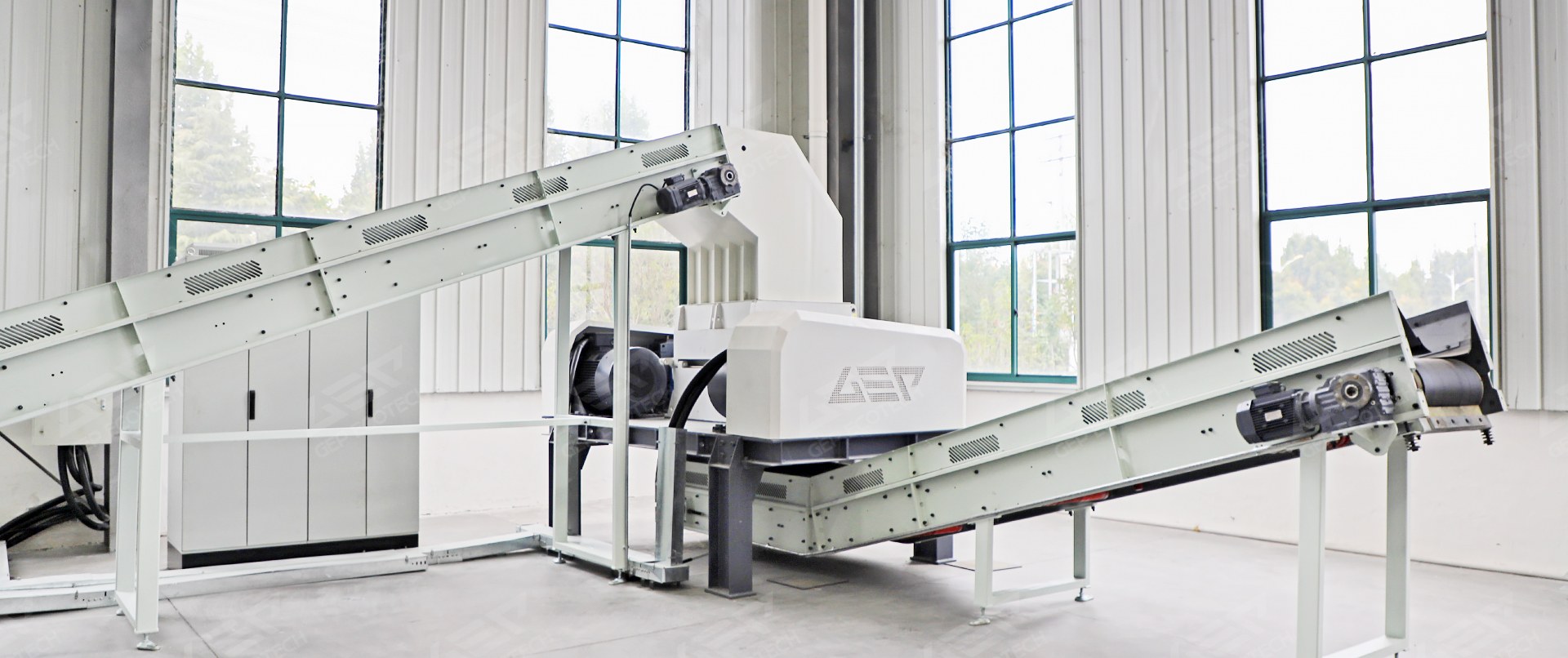
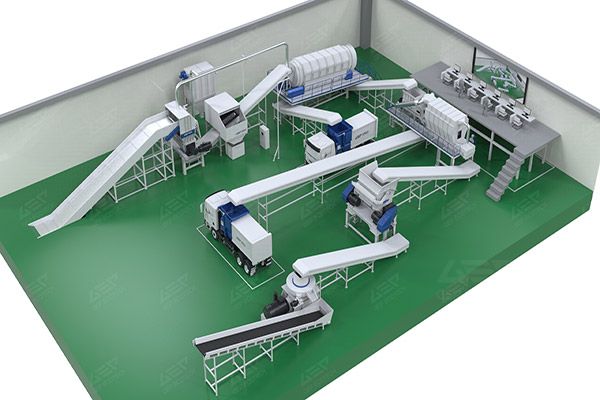
The GPD Series Bag Opener is designed as a front-end processing machine for MSW and packaged materials. Positioned before primary shredding or sorting systems, it gently tears open plastic bags without excessively damaging the materials inside. Its rotating drum and specially arranged tearing hooks loosen compacted waste, release enclosed materials, and create a uniform, free-flowing feed for downstream treatment. The drive system ensures stable operation across different waste compositions, while adjustable drum speed allows operators to control opening intensity.
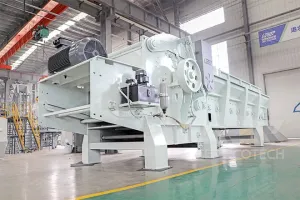
The GZP Series Drum Chipper is an industrial-grade shredding machine for biomass pre-processing, efficiently producing uniformly sized chips for biomass power plants, pulp & paper, organic waste processing and composting. Its heavy-duty drum with sharp cutters rotates at a high speed, powerfully processing woody and fibrous materials from logs and pallets to agricultural waste into consistent fragments, ideal for efficient combustion. It is an indispensable link in sustainable energy production.
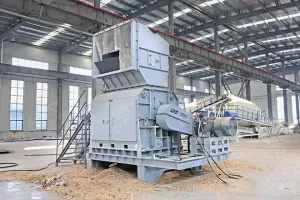
The GXB Series Hammer Mill delivers powerful, versatile grinding for agricultural, forestry, and industrial materials, efficiently processing biomass waste, straw, and feed ingredients into uniform, fine particles. Driven by an electric motor, its high-speed rotor with hardened cutters, shreds material through cutting and impact, while a large surrounding screen ensures consistent output size by allowing only properly sized particles to pass through.
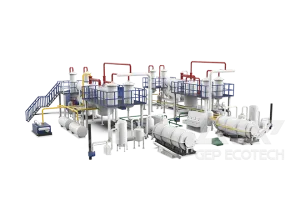
The GEP ECOTECH Waste Tire Pyrolysis System transforms end-of-life tires into valuable resources. Using thermal pyrolysis in a low-oxygen environment, it efficiently converts waste tires into pyrolysis oil, carbon black, and combustible gas. This process not only provides a sustainable recycling solution but also turns waste into profitable commodities.
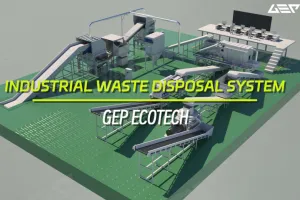
The disposal of industrial waste revolves around volume reduction, reuse and recycling. Depending on the characteristics of the material, a multi-stage shredder or crusher is used to reduce the volume of the material; a separator such as an iron separator is used to separate the reusable metals such as iron, aluminium, copper and zinc; other materials can be separated and recycled, some high calorific value materials can be produced as fuel and other worthless materials can be sent to landfills. GEP Ecotech offers integrated industrial solid waste disposal systems that are not only suitable for specialised solid waste disposal centres, but are also used by companies that generate large quantities of industrial solid waste.
Stationary Construction Waste RecyclingCrushing and sorting solution produces high-purity recycled aggregates.Integrated system ensures stable, continuous, efficient operation.Modular screening, wind sifting ensure consistent output quality.Precise separation recovers metals, turning waste into revenue.Stationary Demolition Waste RecyclingMulti-stage sorting ensures high-purity output, reduces crusher wear.Sorting-first pre-removes impurities, reducing crushing volume, difficulty.Streamlined flow ensures stable operation, high recovery.Waste becomes marketable aggregates, cutting costs, earning revenue.Mobile C&D Waste RecyclingEnables quick transport, on-site setup, immediate source operation.Eliminates long-distance transport, landfill fees via on-site processing.Modular plug-and-play design configures easily for diverse projects.No permanent foundations; high resale value, easy relocation.Dust suppression, optional washing ensure local environmental compliance.
GEP ECOTECH has extensive experience in providing shredding, fuel blending, destruction and recycling for the hazardous waste disposal industry. Whether you are recycling materials, disposing of them in a non-hazardous manner or burning them for energy, GEP ECOTECH can provide you with efficient, safe and stable solutions to help hazardous waste disposal companies improve their safety and economic value.
Waste tires are known as "black gold mines" and are of great recycling value. For example, direct retreading and reuse, recycling steel wire to make steel, rubber grinding to make rubber powder, pyrolysis to make oil, cement rotary kiln or power station alternative fuel (TDF), etc., the benefits are considerable.
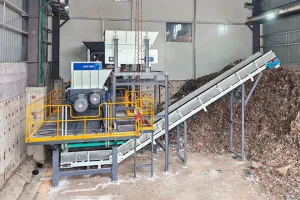
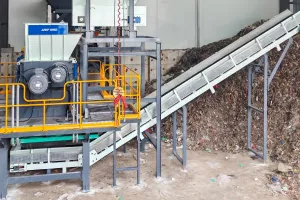
In Hunan, China, a 3–5 t/h municipal solid waste (MSW) shredding project was delivered for a local energy company. The feedstock is high-moisture, mixed and contaminated MSW, making stable shredding difficult. The process uses grab loading, chain-plate feeding, a four-shaft shredder and belt discharge, producing ≤80 mm material for methane production. Compared with the client's previous two-stage dual-shaft system, the new configuration offers better-matched power, higher torque, smoother operation and fewer blockages. It achieves stable capacity, low energy consumption and easy one-button start/stop. The system also reduces secondary pollution and simplifies maintenance, and supports continuous operation with low noise and dust. The client praised the professional installation, fast commissioning and detailed training, saying every stage from solution design to operation has been reliable.
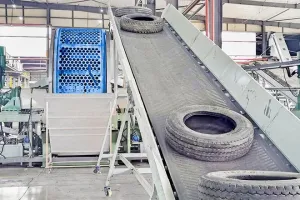
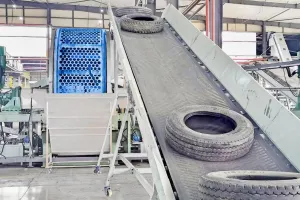
A tire recycling company in Hubei, China purchased an around 1–1.5 t/h crumb rubber production line from GEP ECOTECH. Raw material is 60% truck tires and 40% commercial/car tires, diameter ≤1200 mm; tires ≥800 mm are debeaded before shredding. The configuration is a tire debeader, feeding conveyor, GDT double-shaft shredder with trommel screen for around 50 mm rubber chips, GPT rubber grinding unit with10–30 mesh crumb rubber, which is used in crumb rubber modified asphalt (CRMA) for road asphalting, runway surfacing, road cushions, bolsters, lawns, elastic paving and sports pavements. After comparing many suppliers, the customer chose GEP ECOTECH. The equipment has run stably on site with few failures, and the customer is very satisfied with this practical, compact configuration.
A Southeast Asian tire manufacturer first consulted us in 2024 and finally purchased a 1 t/h tire wire separation line in 2025. It processes waste tires up to 1,200 mm; 80% are standard car tires, and tires with a diameter of ≥800 mm are debeaded before shredding. The line includes a tire debeader, feeding conveyor, GDT double-shaft shredder with trommel screen for discharge around 50 mm rubber chips, and GFT tire wire separator (tire rasper), producing 10–15 mm steel-free rubber granules, which are used to make higher-mesh crumb rubber for further devulcanization into reclaim rubber. With continuous, even feeding of varied materials, it runs smoothly. The customized configuration ensures stable output and easy maintenance. Currently, the equipment operates well with no quality issues, and the customer speaks highly of it.
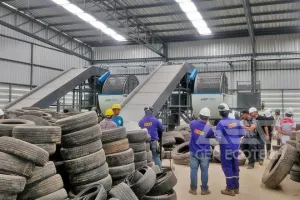
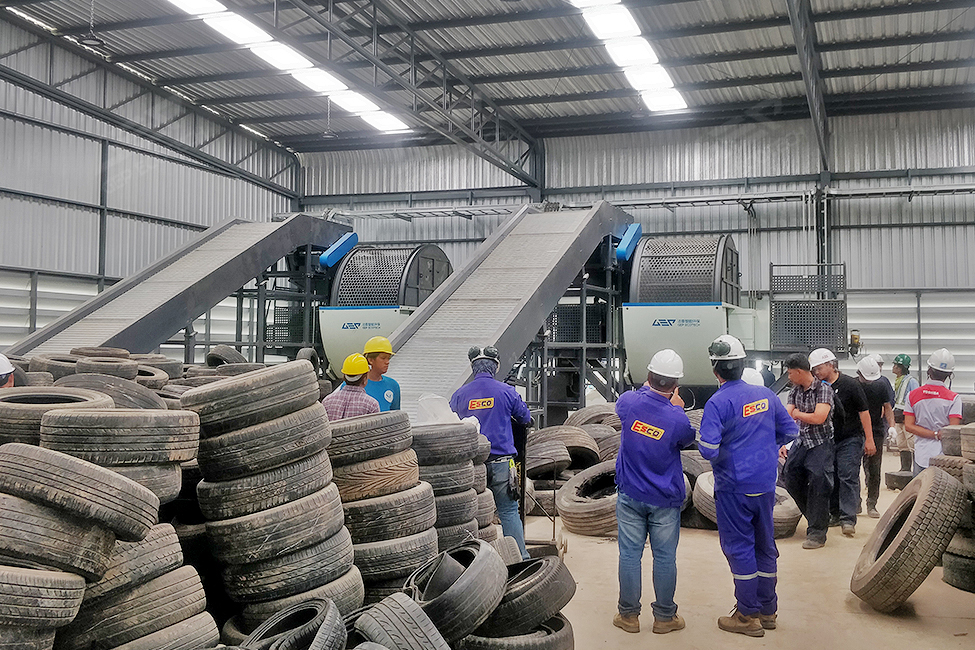
A well-known tire recycling company in South America needed a dependable solution to process end-of-life tires into TDF for alternative fuel in cement kilns. The feed mix is 60% off-road tires and 40% passenger car tires. The line includes a feed conveyor, a GDT8 double-shaft tire shredder with a 1200 mm × 850 mm shredding chamber, and a discharge conveyor. Under continuous, uniform feeding, it achieves 100 tires per hour and produces about 50 mm TDF. The customer is very satisfied: actual capacity fully meets design parameters, and output quality meets requirements. This robust configuration ensures smooth material flow and stable operation. The project provides a reliable reference for similar tire-derived fuel applications and has been running successfully since commissioning.
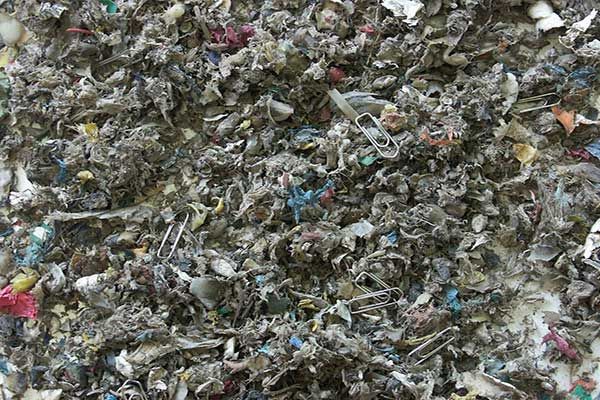
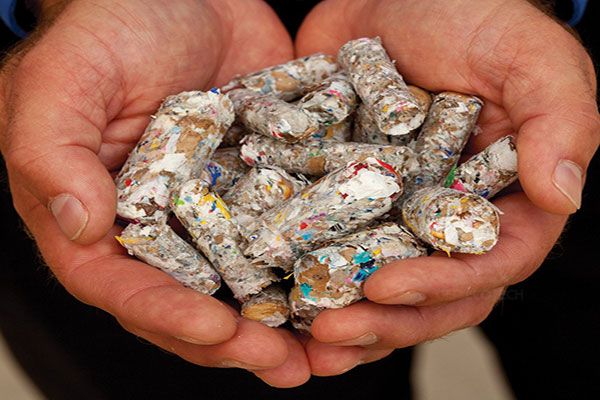
The global conversation around waste-to-energy has moved decisively from ambition to measurable substitution. The refuse-derived fuel (RDF) market was valued at approximately USD 7.34 billion in 2025 and is forecast to reach USD 10.12 billion by 2031, expanding at a 5.56% CAGR. More telling than the headline figure is the divergence within it: pelletized RDF is growing at 8.0% annually, outpacing fluff RDF at 7.0% and baled RDF at 6.6%. Cement kilns remain the anchor demand center, absorbing roughly 52–58% of global RDF consumption, with European plants already achieving average thermal substitution rates of 52–53%—against a global average of just 6%. Meanwhile, global cross-border RDF trade reached approximately 1.23 million tons in 2025, with the EU accounting for 68.2% of intra-regional flows. These numbers reveal a market splitting along a clear fault line: bulk RDF still dominates volume, but densified RDF is capturing the growth premium.RDF Bulk: The Volume WorkhorseRDF bulk—loose, shredded or fluff