At this year's IE Expo China, GEP ECOTECH has introduced two "mysterious new products".
These two new products, one is specifically designed for "small yet sophisticated" scenarios, addressing the issue of "overkill" in small-scale production lines; the other focuses on the field of biomass resource utilization, maximizing the resource value of agricultural and forestry waste.
More importantly, these two new products also align with the new industrial landscape following the release of the "Ten Measures for Solid Waste Management", and are highly compatible with the direction of solid waste resource utilization.
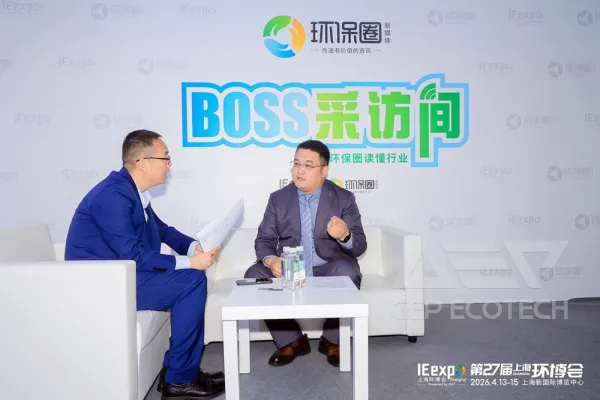
What are these two new products? What are their characteristics? On April 13th, "Environmental Protection Circle" interviewed Chen Binwei, the sales director of GEP ECOTECH, and asked him to answer the above questions.
▼ Chen Binwei (right), Sales Director of GEP ECOTECH, was interviewed by "Huanbaoquan"
1. Designed specifically for "small yet sophisticated" scenarios, addressing the pain point of "overqualified personnel being underutilized"
On April 13th, the first day of the 27th IE Expo China, GEP ECOTECH's booth located at E32/C32 in Hall N5 was already bustling with many people gathered around.
In the booth, several visitors were examining the material of cutting tools and the structure of screen meshes, while technical engineers provided one-on-one explanations about the features of the equipment. In the business negotiation area, customers from different solid waste disposal fields were sitting around and discussing with the sales manager, delving into issues such as equipment customization, project cooperation, and solution implementation. Many customers expressed their intention to cooperate.
Among these visitors, many are long-time customers of GEP ECOTECH. Upon hearing that the company was participating in this year's exhibition, they made a special trip from all over the country, bringing with them new requirements to seek customized solutions. Some even signed contracts or renewed orders on the spot.
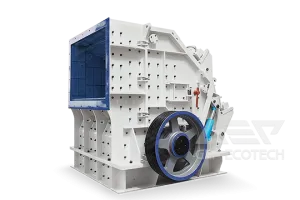
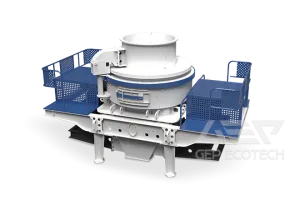
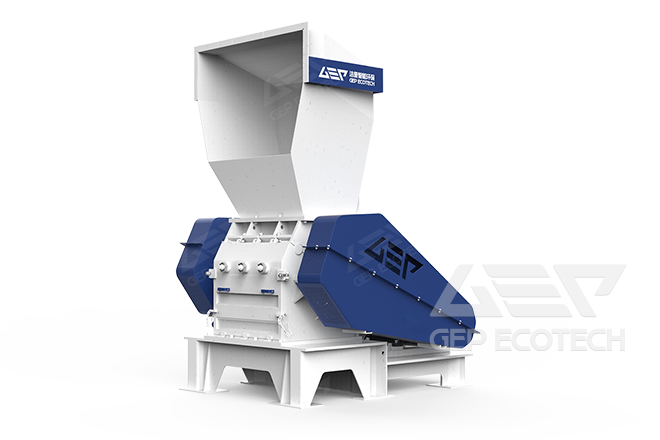
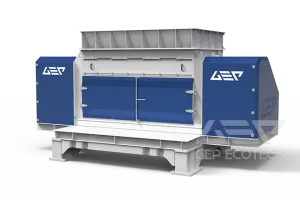
Today at the exhibition, GEP ECOTECH introduced two "mysterious new products", namely the GSS series single-shaft shredder and the GXB series high-speed hammer crusher. These are the latest masterpieces launched by GEP ECOTECH in the field of refined and efficient crushing, after gaining deep insights into customers' pain points.
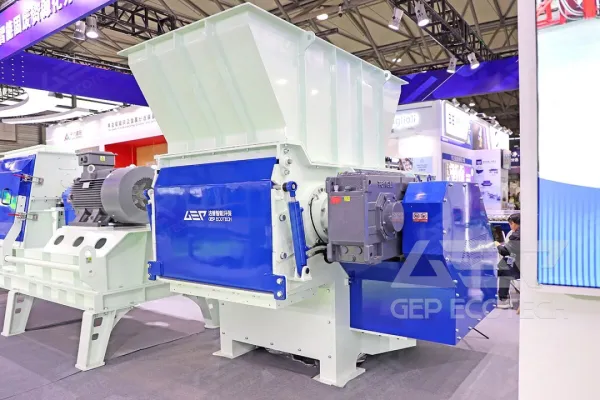
Chen Binwei introduced that the GSS series single-shaft shredder is a device specifically designed for "small yet sophisticated" scenarios. Its core objective is to address pain points such as awkward equipment selection, low efficiency, and complex operation and maintenance in low-to-medium production conditions.
▼ GSS Series Single-shaft Shredder
In the past, many customer projects or workshop production lines had low output. However, mature large-scale equipment on the market was costly, energy-intensive, and space-consuming, lacking a professional option with high cost-effectiveness. This resulted in "overkill" for small-output production lines.
The GSS series single-shaft shredder adopts a highly integrated design, incorporating feeding and discharging, crushing, pushing, screening, driving, and intelligent control systems. The entire machine is lightweight, compact, easy to install, and flexible to move, making it ideal for low-output conditions and perfectly filling a market gap.
"It is like a flexible and efficient 'jack-of-all-trades', bringing customers a new experience of 'high quality, high efficiency, and low cost' even under low-volume production conditions," said Chen Binwei.
Additionally, there is the GXB series high-speed hammer mill. The core objective of this equipment is to address the challenges related to efficiency, particle size, and maintenance when dealing with materials such as biomass, straw, wood chips, and other materials that require ultra-fine grinding (around 10mm).
▼ GXB Series High-Speed Hammer Mill
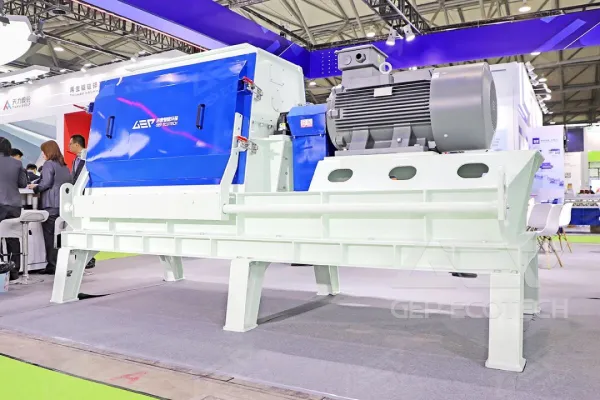
In the past, traditional crushers suffered from low efficiency and uneven material discharge. For agricultural and forestry waste with high fiber content and moisture, conventional hammer crushers were prone to blockages, high energy consumption, low output, and difficulty in stably controlling the particle size of the crushed material.
Meanwhile, traditional hammer mills suffer from rapid wear of the hammer blades, which are troublesome to replace, and frequent downtime for maintenance, seriously affecting production efficiency.
To address these issues, the GXB series high-speed hammer mill adopts a large-capacity grinding chamber design. Materials are subjected to multiple impacts and shearing from high-speed rotating hammer blades inside, ensuring more thorough and uniform grinding. Additionally, it features a symmetrical hammer blade design, with the blades reversible for reuse, significantly extending their service life.
"The GXB series is designed to help customers achieve efficient, stable, and low-cost ultrafine crushing in the field of biomass energy, maximizing the resource utilization value of agricultural and forestry waste," said Chen Binwei.
He stated that these two devices, one delving deeply into the segmented needs of traditional fields, and the other expanding horizontally the technological boundaries of biomass resource utilization, fully embody the concept of "professionalization, digitalization, and high-value orientation" of GEP ECOTECH.
2. IE Expo China Benchmark—"Ten Measures for Solid Waste Management" Brings Historic Opportunities
Currently, the environmental protection industry is generally facing challenges, and many companies are cutting their budgets. Why did GEP ECOTECH still participate in IE Expo China?
Chen Binwei said that this is actually based on the research and judgment of industry trends and the consideration of their own development stage.
In his view, IE Expo China is the largest and most influential environmental protection industry event in Asia, bringing together the world's most cutting-edge technologies and the most active market information. For GEP ECOTECH, the purpose of participating in IE Expo China goes far beyond on-site order conversion; it is more important to "display its image, observe trends, and expand its network".
▼ GEP ECOTECH's booth at the 27th IE Expo China
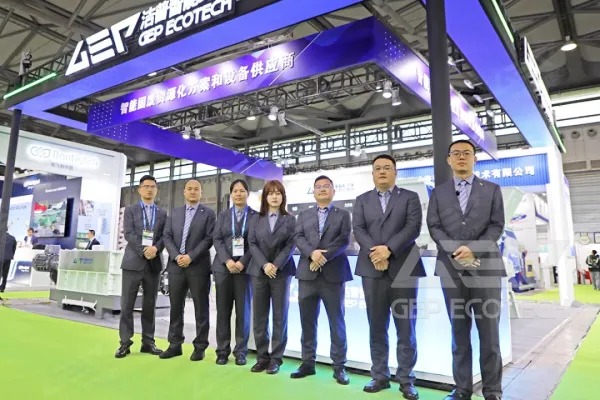
For example, IE Expo China can efficiently bring together potential customers, industry experts, government agencies, and other stakeholders, creating valuable opportunities for exchanges and cooperation for enterprises. This is what we call "networking".
Meanwhile, IE Expo China serves as a bellwether for the industry. Here, enterprises can gain first-hand insights into new policies, technologies, and demands in the field of solid waste recycling, providing direction for the company's research and development and market strategies, that is, "seeing trends".
Speaking of trends, in January this year, the State Council just issued the "Action Plan for Comprehensive Treatment of Solid Waste", commonly known in the industry as the "Ten Measures for Solid Waste Management". This is undoubtedly a milestone-significant benefit for the entire solid waste resource recovery and disposal industry.
▼ Source: www.gov.cn
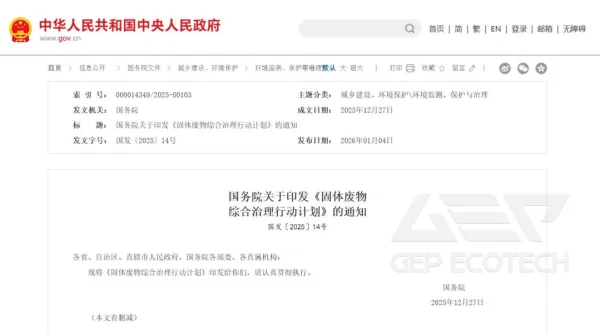
Specifically, the benefits are also reflected in the following three aspects:
Firstly, market expansion and standardization.
The policy clarifies that resource utilization is the mainstream direction, requiring the improvement of the utilization level of bulk solid waste and renewable resources, and will coordinate financial support for project construction, which directly opens up a huge market space for the entire industry.
Meanwhile, the policy's crackdown and elimination of illegal dumping and outdated production capacity will accelerate industry restructuring, benefiting enterprises like GEP ECOTECH that possess compliant technology and high-quality production capacity.
Secondly, technological innovation has become the core driving force.
The "Ten Measures for Solid Waste Management" specifically emphasizes the need to "tackle key technologies for the circular utilization of solid waste" and provides technical and financial support. This provides a strong policy backing for technology-driven enterprises like GEP ECOTECH, encouraging them to make bolder investments in innovation in areas such as intelligent crushing, fine sorting, and high-value utilization.
Thirdly, substantial guarantees have been provided for industrial development.
The policy also requires local governments to allocate no less than 1% of industrial land to support resource recycling facilities, and promote fiscal and tax measures such as "reverse invoicing", providing tangible guarantees for the implementation and operation of solid waste resource recovery projects.
Facing the historic opportunities brought by the "Ten Measures for Solid Waste Management", GEP ECOTECH's response strategy is also very clear, which is to accelerate technological innovation, upgrade intelligent manufacturing, and deepen market layout.
- The first is the re-acceleration of technological innovation. GEP ECOTECH will continue to adhere to the development path of "specialization, refinement, uniqueness, and innovation", focusing on the key technological breakthrough directions proposed in the "Ten Principles for Solid Waste Management". We will intensify our research and development efforts in areas such as alternative fuel preparation, high-value sorting of complex solid waste, and recycling processes for emerging solid waste (such as batteries and wind turbine blades), using more advanced technologies and equipment to empower the industry's development.
- The second aspect is the further upgrading of smart manufacturing. GEP ECOTECH will fully utilize its existing smart manufacturing base and digital management system to further enhance product quality and production efficiency, reduce manufacturing costs, and create more competitive products through "lean manufacturing" to meet the market's demand for high-quality and high-efficiency equipment.
- Lastly, we will further deepen our market layout. They will also closely follow policy guidance, actively expand market applications in areas such as the resource recovery of construction waste, the energy conversion of agricultural and forestry waste, and the high-value utilization of industrial solid waste. They will work closely with partners upstream and downstream in the industry chain to jointly create more replicable and scalable demonstration projects. Through practical actions, they will respond to the national call and contribute "GEP ECOTECH power" to the construction of "waste-free cities" and the achievement of the dual carbon goals.
3. Specialization, excellence, uniqueness, and innovation: building a "technological moat"
It is understood that GEP ECOTECH is a national high-tech enterprise driven by both technological innovation and social responsibility, dedicated to providing customers with intelligent solid waste recycling equipment and complete line system solutions. The company's self-developed shredding equipment, crushing equipment, mobile solid waste equipment, and intelligent monitoring systems have been granted 128 national patents. The company boasts a 66,000 ㎡ high-efficiency intelligent environmental protection equipment manufacturing base.
▼ Intelligent equipment manufacturing base
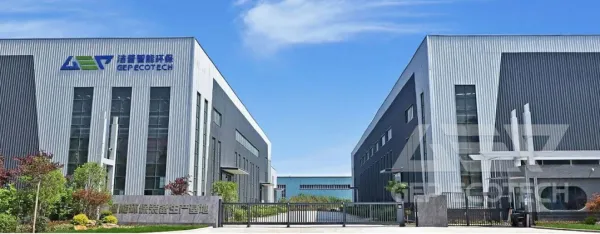
With over a decade of experience in the field of solid waste resource recovery and disposal, GEP ECOTECH has built numerous "technological moats" in various domains including industrial waste, household waste, construction and renovation waste, as well as agricultural and forestry waste. This "moat" is not merely a single technological aspect, but rather a systematic framework encompassing "specialization, precision, uniqueness, and innovation".
- The first layer of the "moat" is "specialization", which refers to a long-term strategic focus. Since its establishment, GEP ECOTECH has consistently focused on four core areas: industrial waste, household waste, construction and decoration waste, and agricultural and forestry waste. Instead of blindly expanding, it has been deeply engaged in the main channel of solid waste crushing, sorting, and resource utilization for more than ten years. This focus has allowed them to accumulate profound industry knowledge and experience, which is difficult for any new entrants to replicate in the short term.
- The second layer of the "moat" is "precision", which represents the strength barrier of lean manufacturing. No matter how good the design is, it needs to be realized through excellent manufacturing. GEP ECOTECH boasts a 66,000 square meter high-efficiency intelligent environmental protection equipment manufacturing base, equipped with over a hundred sets of CNC precision machining equipment. More importantly, they have built a digital factory with the help of intelligent IoT systems, achieving full-process digital control and quality traceability from raw material storage to finished product delivery. This lean manufacturing capability ensures that every piece of equipment can operate stably under extreme working conditions, thus forging an excellent reputation for product quality.
- The third layer of the moat is "uniqueness", which refers to the "unique skills" to address industry pain points. This is the most differentiated advantage of GEP ECOTECH. When facing technical challenges within the industry, they always come up with unique solutions through innovation. For example, in response to the safety challenge of waste lithium battery recycling, GEP ECOTECH innovatively developed a fully enclosed live crushing system, which achieves safe and continuous crushing on the basis of "zero discharge". This completely solves the core pain points of traditional processes, such as the complexity of forced discharge procedures and significant safety hazards. This is precisely the embodiment of our "unique skills".
The fourth layer of our competitive advantage is "innovation", which refers to our continuous iterative innovation capability. Both technology and the market are constantly evolving, so clinging to past advantages cannot ensure long-term success. GEP ECOTECH has consistently invested in innovation with an average annual R&D growth rate of over 10%. Over the past three years, we have added more than 30 national patents, and currently hold a total of 128 national patents and 39 software copyrights. Our continuous technological innovation ensures that our technological competitive advantage is not only profound but also capable of expanding and deepening with the development of the times.
"These 'technological moats' are precisely the core competitiveness that enables GEP ECOTECH to sustain its development," said Chen Binwei.
In the past two years, GEP ECOTECH has also actively embraced the era of "new solid waste" and achieved new accomplishments in emerging recycling fields such as new energy batteries.
Chen Binwei stated that in the face of the "new solid waste" wave, GEP ECOTECH's attitude is very clear: to take the initiative and prioritize technology. Especially in the field of new energy battery recycling, they have made very substantial progress and achievements.
Addressing the core safety concern in the recycling of spent lithium batteries, GEP ECOTECH has successfully developed and validated the "Lithium Battery Live Shredding System". This system achieves safe and continuous crushing of lithium batteries without "zero discharge", eliminating the need for cumbersome and costly forced discharge procedures. This approach fundamentally reduces the risk of short-circuit fires and explosions, significantly enhancing the safety and efficiency of the recycling process.
The system comprises six major components: loading, feeding, crushing, discharging, fire protection, and intelligent monitoring. It achieves automated and enclosed intelligent safety control throughout the entire process from material feeding to discharging. Currently, it has been successfully applied in practical projects.
"We not only provide core crushing equipment, but also strive to offer complete recycling system solutions. From the feeding, crushing, pyrolysis, and sorting of batteries to the final production of high-value 'black powder' (containing valuable metals such as lithium, cobalt, and nickel), we continuously optimize our processes to help customers improve recycling efficiency and reduce operating costs," said Chen Binwei.
In the future, GEP ECOTECH will continue to delve deeply into the field of new energy battery recycling. On the one hand, we will persistently optimize existing technologies to further enhance the recovery rate and processing efficiency. On the other hand, we will actively track the development of recycling technologies for other emerging solid wastes such as wind turbine blades and photovoltaic modules, make technical reserves and forward-looking layouts, and be ready to incorporate these "misplaced resources" into GEP ECOTECH's resource recovery portfolio at any time, contributing more to the construction of a green and low-carbon circular economy.
Article source: Environmental Protection Circle Author: Fubo Wangzu